
Short answer
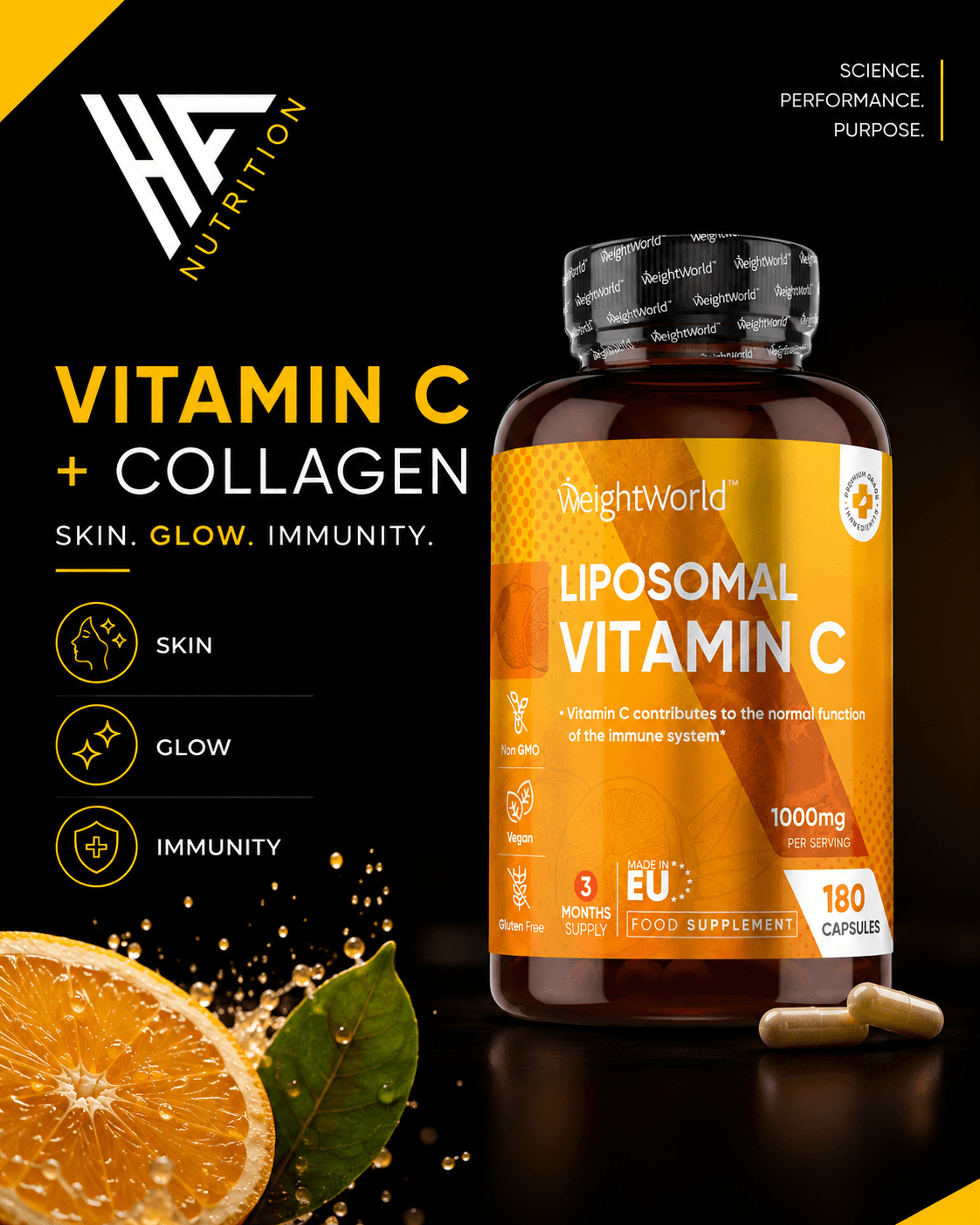
Vitamin C contributes to normal collagen formation for the normal function of skin, helps protect cells from oxidative stress and supports the normal functioning of the immune system. Liposomal formats can improve tolerance at meaningful doses.
Key takeaways
- Contributes to normal collagen formation for skin.
- Contributes to the reduction of tiredness and fatigue and protects cells from oxidative stress.
- Liposomal vitamin C is often easier on the gut than high-dose plain ascorbic acid.
Collagen and skin
Collagen is a key structural protein in skin. Vitamin C contributes to normal collagen formation, which is why it features in many beauty-focused routines.
It also contributes to the reduction of tiredness and fatigue and to the protection of cells from oxidative stress.
Why liposomal vitamin C
Liposomal encapsulation can improve absorption and sidestep the digestive discomfort some people get from large doses of standard vitamin C. That is the format behind WeightWorld Liposomal Vitamin C.
Morning use, as a consistent daily habit, is a common approach.
Research and useful links
External references
These links point to health organizations, indexed research and official brand pages that support the context behind this guide.
Frequently asked questions
Quick answers
Does vitamin C help skin?
Yes—vitamin C contributes to normal collagen formation, which matters for skin structure and radiance.
Why liposomal?
Often better absorption and digestive comfort than plain high-dose ascorbic acid for sensitive stomachs.