
Short answer
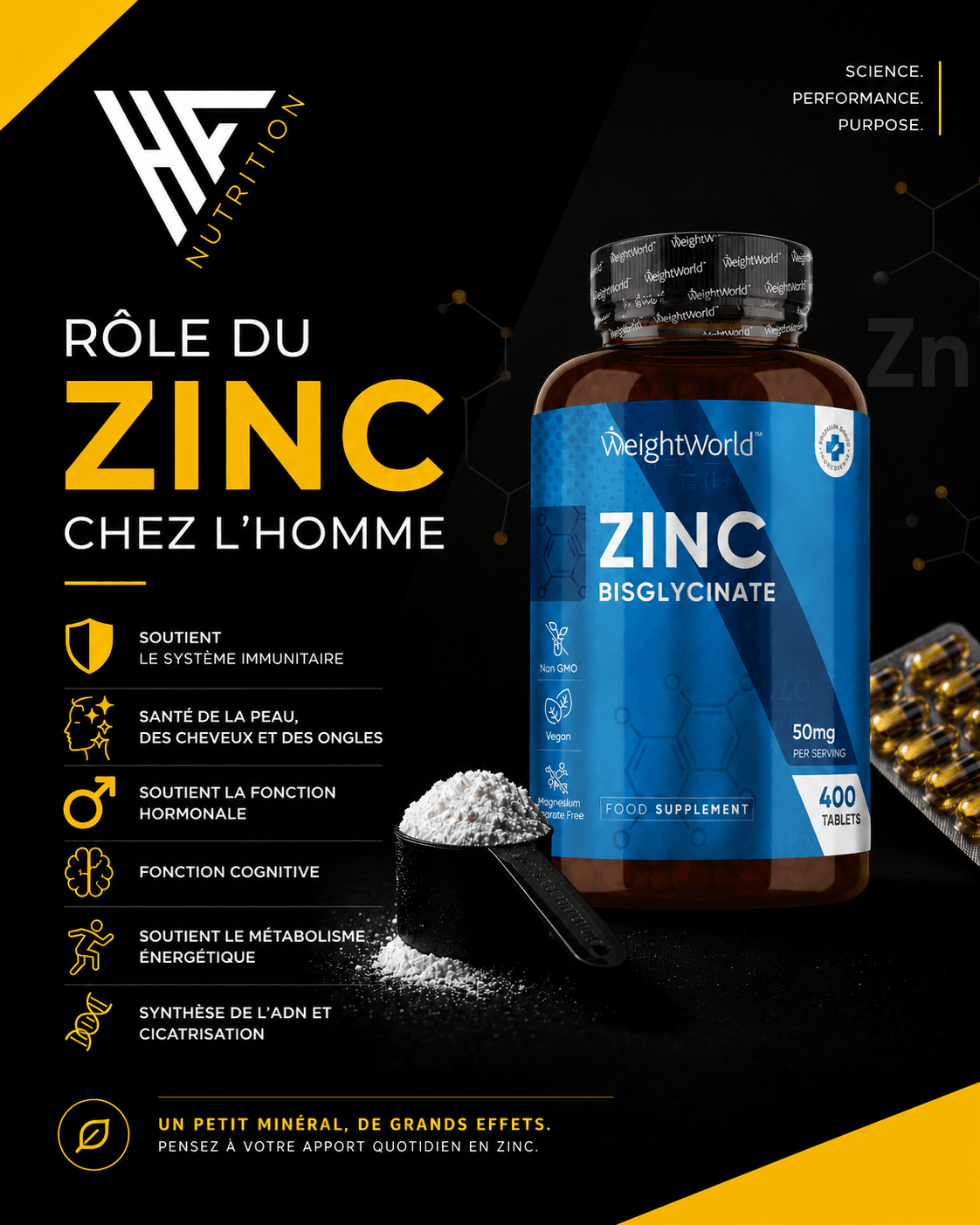
Zinc contributes to the maintenance of normal testosterone levels in the blood and to normal fertility and reproduction. It also supports the normal functioning of the immune system.
Key takeaways
- Zinc contributes to the maintenance of normal testosterone levels in the blood.
- It contributes to normal fertility and reproduction.
- Bisglycinate is a chelated form that is often well tolerated, including in the evening.
Zinc and men’s vitality
Zinc is an essential mineral with many roles. In authorised nutrition wording, it contributes to the maintenance of normal testosterone levels in the blood—it mainly helps when dietary intake is low, not to push levels above normal.
It also contributes to normal fertility and reproduction and to the normal functioning of the immune system.
Using it well
Zinc is usually best absorbed away from meals very high in calcium or iron. An evening dose with WeightWorld Zinc Bisglycinate is practical and often well tolerated.
Many active men stack it with magnesium in a simple evening routine.
Research and useful links
External references
These links point to health organizations, indexed research and official brand pages that support the context behind this guide.
Frequently asked questions
Quick answers
Does zinc increase testosterone?
Zinc contributes to the maintenance of normal testosterone levels. The clearest relevance is when intake from food is insufficient.
When should I take zinc?
Away from large dairy or iron supplements if possible—often in the evening for convenience and absorption.