Short answer
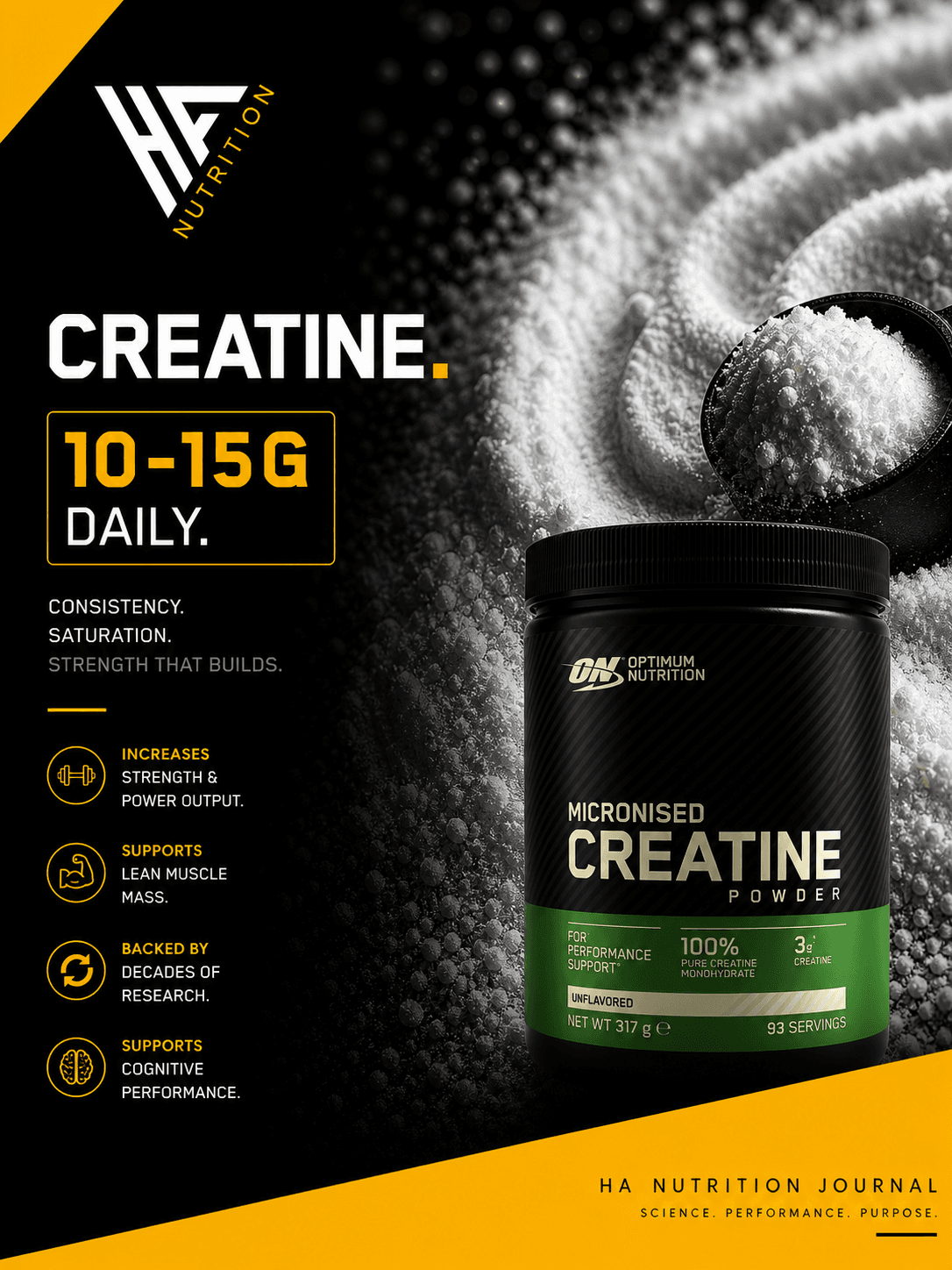
Pure creatine monohydrate is the reference form: it supports explosive training, and peer-reviewed reviews also link it to brain creatine stores, memory and mental fatigue resistance. At HA Nutrition we frame a practical daily range around 10–15 g (split across servings), without sugar-heavy blends.
Key takeaways
- A higher daily intake window (10–15 g), split through the day, can suit people targeting muscle saturation and brain uptake; adjust with a professional if you have medical conditions.
- Systematic reviews and meta-analyses report cognitive benefits—especially memory, attention and processing speed—though results vary by age, sex and study design.
- Pure monohydrate from trusted brands beats proprietary creatine cocktails for transparency and cost per gram.
Why pure creatine is enough for performance
Creatine buffers ATP turnover during short, high-intensity effort. For the gym, that means heavier sets, repeat sprints and more stable power output. You do not need stimulants or sugar on the label for that mechanism to matter.
Optimum Nutrition Micronized Creatine and BioTechUSA 500 g monohydrate fit our standard: one declared ingredient, honest serving math, and tubs that last through real training blocks.
Dosing: toward 10–15 g daily (split doses)
Sports nutrition references often cite modest maintenance intakes, while research protocols sometimes use short loading phases (~20 g/day split) before a lower maintenance phase. A 10–15 g daily band is a middle path many experienced users adopt: split into 2–4 shakes or meals for tolerance and steady absorption.
If you are new to creatine, consider starting lower for one to two weeks, then increasing toward 10–15 g only if digestion and hydration feel good. Pregnant people, kidney disease or prescribed drugs warrant a clinician’s sign-off before high intakes.
Creatine and the brain: memory, mood and fatigue
The brain is metabolically greedy. Reviews summarize that supplemental creatine can raise cerebral creatine and phosphocreatine, supporting ATP-heavy tasks when demand spikes—mental fatigue, sleep debt, or cognitively loaded work.
Meta-analyses of adults report signals for memory, attention and information-processing speed, with stronger or more consistent findings in some subgroups (for example older adults or when tasks are stressful). Mood-related data are promising but less uniform; treat energetic or resilience claims as context-dependent, not guaranteed.
None of this replaces sleep, food quality or clinical care for depression or anxiety. Use creatine as an evidence-informed lever alongside those foundations.
Research snapshots (independent sources)
Open the Research and useful links panel below for peer-reviewed synthesis and meta-analyses (PMC, PubMed, Nutrition Reviews, NIH ODS) you can cross-check. They are the same class of sources you would use to fact-check creatine before recommending it to a training client or family member.
Research and useful links
External references
These links point to health organizations, indexed research and official brand pages that support the context behind this guide.
Journal of the International Society of Sports Nutrition
ISSN position stand: creatine safety and efficacy
Research-backed position stand on creatine supplementation.
Open source →
NIH Office of Dietary Supplements
Creatine fact sheet for health professionals
NIH overview of creatine uses, safety and research context.
Open source →
PubMed
Creatine supplementation and exercise
Indexed research reference for creatine safety and performance.
Open source →
PMC
Creatine supplementation and cognitive function in healthy individuals (systematic review of RCTs)
Synthesizes randomized trials on creatine and cognitive performance in healthy people.
Open source →
PubMed
Creatine supplementation and cognitive function in adults (systematic review and meta-analysis)
Meta-analysis reporting pooled effects on memory, attention and processing speed in adults.
Open source →
PMC / Nutrients
Effects of creatine supplementation on brain function and health
Review on creatine, brain bioenergetics and cognition under metabolic stress.
Open source →
Nutrition Reviews (Oxford Academic)
Creatine supplementation and memory in healthy individuals (meta-analysis)
Meta-analysis of RCTs on memory outcomes; effects vary by age and protocol.
Open source →
Optimum Nutrition
Micronized Creatine Powder
Official Optimum Nutrition creatine monohydrate product page.
Open source →
BioTechUSA
100% Creatine Monohydrate
Official BioTechUSA creatine monohydrate product page.
Open source →
Frequently asked questions
Quick answers
Why 10–15 g instead of the old 3–5 g figure?
Many coaches still anchor on 3–5 g maintenance after loading, or for smaller athletes. We highlight 10–15 g for readers who want fuller muscle and brain pools and who tolerate split doses well—adjust downward if lighter, or if a clinician advises caution.
Does creatine improve mood or memory for everyone?
No. Meta-analyses show average benefits in some cognitive domains, but individual response differs. Memory tends to be the most studied outcome; mood data are earlier-stage.
Do I need a creatine blend?
Rarely. Pure monohydrate is the most studied form. Blends often add cost without adding evidence.